Retinal Oxygen Saturation Estimation
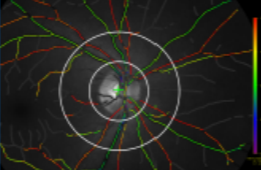
The retina is a light-sensitive tissue layer at the posterior inside of the eye. Millions of nerve axons running all over the retina convert the incident light into neural signals, which are carried to the brain by the optic nerve for visual perception. Oxygen is important for normal functionality and metabolism in the retina. The retinal arteries carrying oxygenated hemoglobin (HbO2) enter the retina, and veins carrying deoxygenated hemoglobin (Hb) leave the retina through the optic nerve head. In a retinal fundus image, the optic nerve head appears as a disc, referred to as the optic disc (OD). The retina has the highest metabolic demand than any other tissue in the body. Inadequate delivery and abnormal utilization of oxygen alter the normal functioning of the retina and trigger diseases such as diabetic retinopathy, glaucoma, age related macular degeneration, retinal vein occlusions, and retinal detachment, leading to vision impairment. Early detection of the pathological condition followed by suitable treatment may improve the retinal blood flow and oxygenation and restore vision.
